Pão de queijo
The cheese bread from Minas Gerais that's sold at every airport, bakery, and bus station in the country. It's gluten-free by accident, the dough is cassava starch (polvilho) bound with eggs, oil, and grated cheese, baked into airy little balls with chewy interiors. They're at their best ten minutes out of the oven. Buy from a real padaria, never a freezer pack reheated badly. In Belo Horizonte, look for Cantina do Lucas or any place advertising pão de queijo da roça.
Feijoada
The national dish, a heavy stew of black beans and various cuts of pork (sausage, ribs, belly, sometimes ear and tail), served with rice, sautéed collard greens (couve), orange slices, farofa, and a small caipirinha if you're being honest. Most Brazilians eat feijoada on Wednesday or Saturday. In Rio, the institution is Casa da Feijoada in Ipanema or Bar do Mineiro in Santa Teresa. It's a 3pm-nap-after kind of meal.
Brigadeiro
The little chocolate truffle that powers every Brazilian birthday party. Condensed milk + cocoa + butter, cooked down and rolled in chocolate sprinkles. Modern brigaderias have made it gourmet (try Maria Brigadeiro in São Paulo) but the homemade version in a bowl with a spoon, brigadeiro de colher, is the real one. The white sister is beijinho, made with coconut.
Açaí na tigela
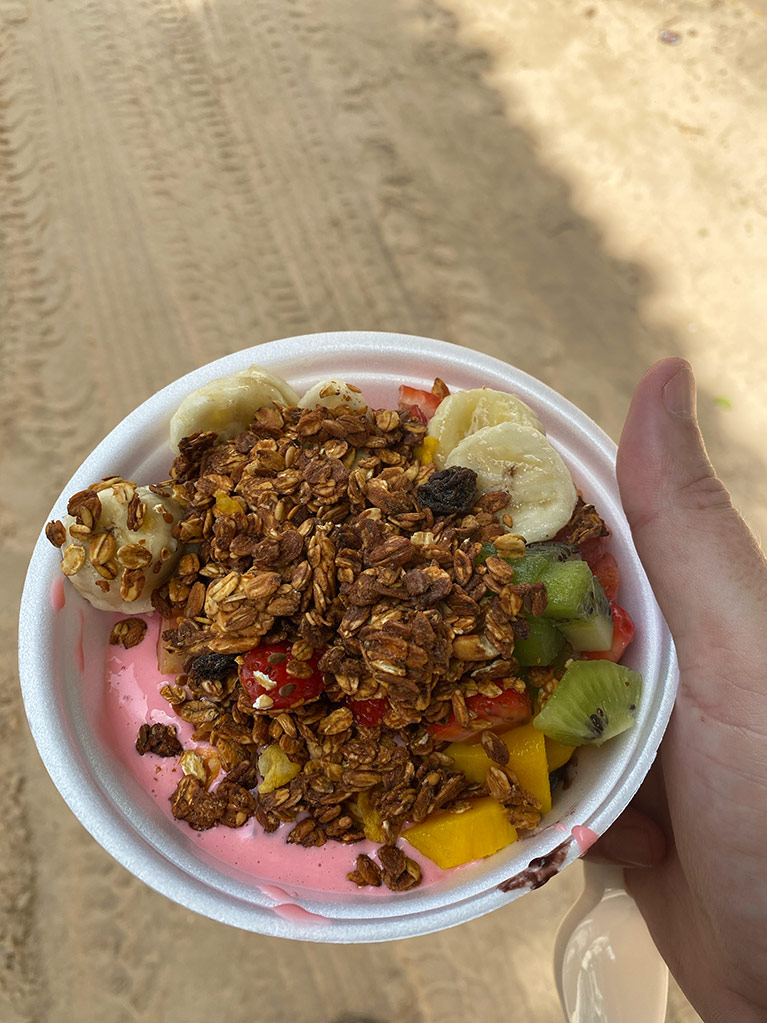
What gets exported as a "superfood" is, in Brazilian beach cities, a frozen sorbet of açaí pulp blended with banana and guaraná syrup, served cold in a bowl with granola and sliced banana. Light, energizing, and the default post-surf meal. Real Amazonian açaí is different, savory, room-temp, eaten with farinha and fish, but the bowl version is what you'll find at every açaiteria from Rio to Floripa.
Picanha
The cut of beef that turned Brazilian barbecue into a global cuisine, the cap of the rump, with a thick fat layer that bastes the meat as it cooks. Salted with rock salt, threaded onto a long skewer, grilled over coals. At a rodízio (all-you-can-eat churrascaria like Fogo de Chão), it's the cut you wait for. At home, Brazilians cook it medium-rare on a simple grill. Don't trim the fat, that's the entire point.
Moqueca
A coastal fish stew that exists in two main schools: moqueca baiana (from Bahia, made with palm oil dendê and coconut milk) and moqueca capixaba (from Espírito Santo, lighter, no dendê, no coconut, more annatto). Both are cooked in clay pots and served with rice, pirão (fish-stock manioc puree), and farofa. In Salvador, Paraíso Tropical is the legendary spot. In Vitória, follow the locals.
Coxinha
The bar snack that wins every poll. A teardrop-shaped fried dumpling, crispy outside, filled with shredded chicken and cream cheese (catupiry). You'll find it at every boteco, every party, every gas station, and the good ones cost R$8–15. Veloso in São Paulo serves what many call the country's best.
Pastel
Brazil's empanada, but bigger, thinner, and deep-fried until shatteringly crisp. Fillings range from cheese and ground beef to heart of palm, shrimp, and chocolate-banana. The classic pairing is at a Saturday feira (street market) with a glass of fresh caldo de cana (sugarcane juice). São Paulo's Hocca Bar at Mercadão is the touristy classic; any neighborhood feira has better.
Tapioca
Northeastern street food made by sprinkling cassava starch onto a hot dry pan, it fuses into a thin crepe in 30 seconds, then gets folded around fillings sweet (banana with condensed milk, coconut) or savory (cheese with oregano, shredded chicken, carne de sol). It's gluten-free, fast, and perfect for the beach. Look for tapiocarias along any Northeast boardwalk.
Guaraná
The native Amazonian berry that became Brazil's signature soft drink. Guaraná Antarctica is the supermarket version, fruity, mildly caffeinated, often paired with pizza or feijoada the way Americans pair Coke. Real guaraná powder is sold in markets and is roughly twice as strong as coffee. You'll also see it in Açaí bowls and energy syrups. Pronounced gwa-ra-NAH.
Where to find them
Plan your eating by region. Minas Gerais for pão de queijo and home cooking. Rio for feijoada and botequim culture. São Paulo for serious coxinha, pizza, and modern brigaderias. Bahia for moqueca, acarajé, and street food. The South for picanha and the full churrasco experience. The Northeast coast for tapioca and queijo coalho on the sand. And any padaria, anywhere, for breakfast, because the daily Brazilian eating ritual starts with coffee, a hot pão de queijo, and a slice of cheese melting on a buttered roll.
Further reading
Pages and resources that pair well with this post.