The structural anatomy of a Brazilian meal
Brazil's daily eating runs on a few institutions you should learn fast. The prato feito ("PF") is the working person's lunch: rice, beans, a protein, a small salad, and usually fries or farofa, served on one plate for R$25–40. The marmita is the same idea boxed up to take home, most cities have marmitarias on every block. The most addictive format is comida por quilo (or self-service), a buffet where you weigh your plate and pay by the kilo, typically R$70–110/kg. It's how you eat well, fast, and cheap, and it's where you'll learn the country's dishes by sampling. Dinner runs late, Brazilians eat at 8 or 9pm, and lunch is the bigger, hotter meal.
South, churrasco, chimarrão, and European farms
The three southern states (Rio Grande do Sul, Santa Catarina, Paraná) were settled by Germans, Italians, and Poles, and the food shows it. The signature is churrasco gaúcho: slow-grilled beef on long skewers, salted simply with rock salt, served with arroz, vinagrete, and farofa. The cut to know is picanha, the prized rump cap. Chimarrão, bitter green yerba mate sipped from a shared gourd, is the regional ritual; you'll see groups passing one in parks and on beaches. Santa Catarina adds German strudel, smoked sausages, and oysters from Florianópolis. Paraná leans Italian, with polenta, barreado stew, and pine-nut pinhão in winter.
Southeast, pizza, boteco, and botequim
The Southeast is where most of Brazil lives and where most international ideas land first. São Paulo has the country's serious restaurant scene and, surprisingly, the world's second-largest population of Italian descent, its pizza is a religion (Bráz, Cristal, Speranza). Minas Gerais is the heartland: think mountain comfort food in a boteco. Order feijão tropeiro (beans with farofa, sausage, and collard greens), frango com quiabo (chicken with okra), pão de queijo still hot, and a slice of queijo Minas with guava paste, the famous Romeu e Julieta. Rio codified the botequim: the unfussy corner bar that lives on cold beer, salted codfish balls (bolinhos de bacalhau), and shrimp pastéis.
Northeast, the soul of Brazilian cooking
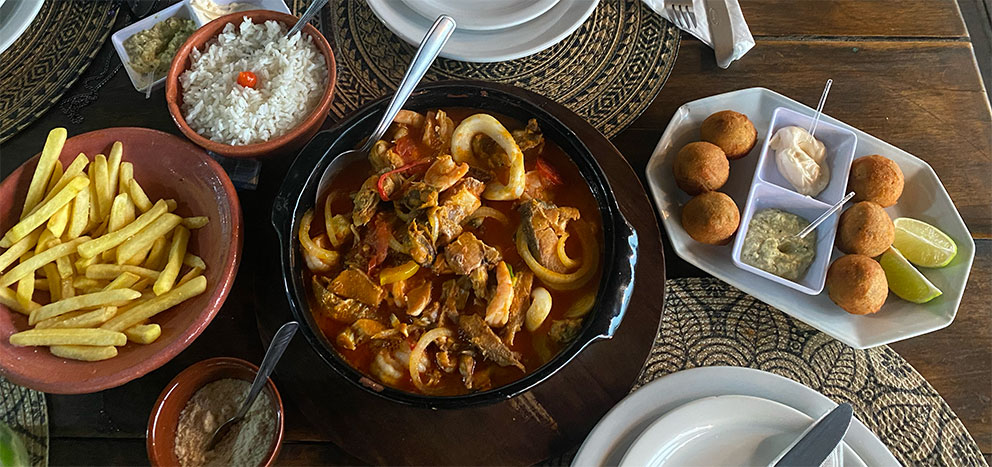
If you eat in only one region, eat in the Northeast. Bahia mixes African, indigenous, and Portuguese roots with palm oil (dendê) and coconut milk. The dishes you must try: moqueca baiana (fish stew in dendê and coconut), acarajé (black-eyed pea fritters split and stuffed with vatapá and shrimp, sold by women in white lace dresses), and caruru. Pernambuco and Paraíba bring drier, beef-and-cheese cooking from the sertão, try carne de sol with macaxeira (cassava). Across the coast you'll eat tapioca (a hot crepe of cassava starch), queijo coalho grilled on a stick on the beach, and the world's best água de coco. Ceará is shrimp country. The seasoning is brighter, the chili gentler, and lime is everywhere.
North, Amazonia on a plate
The Amazon's cuisine is the most foreign-feeling for newcomers and the most rewarding to figure out. Belém, Manaus, and the river towns cook with ingredients you've never seen: tucupi (a yellow broth made from fermented cassava), jambu (a leaf that numbs your tongue), and dozens of fish, tambaqui, pirarucu, tucunaré. Order tacacá (a hot tucupi-and-jambu broth with shrimp, sipped from a gourd at street stalls) and pato no tucupi. Real Amazonian açaí is salty, served warm with farinha and dried shrimp, nothing like the gym-bowl version sold in Rio. Try cupuaçu, bacuri, and graviola juices; they're worth the trip.
Center-West and what to order on day one
Don't sleep on the Center-West. Goiás, Mato Grosso, and Mato Grosso do Sul cook with river fish (pintado, pacu), pequi (a strong, almost cheesy fruit), and Pantanal beef. Empadão goiano is the regional pie. If you're new in the country and want a single first day of eating, here's the lineup: a pão de queijo with morning coffee, a PF at lunch (rice + beans + grilled chicken + farofa), an açaí na tigela mid-afternoon, and a botequim dinner of caipirinha + grilled picanha + farofa. By day two, branch out, at comida por quilo, take a small spoonful of everything you don't recognize. That's how every Brazilian learned, too.
Further reading
Pages and resources that pair well with this post.