The kiosk economy
The Brazilian beach is built around the barraca (or quiosque), a numbered stretch of plastic chairs and umbrellas operated by a single waiter or family team. You walk on the sand, find an open table at a barraca that looks busy enough, and sit. A waiter brings menus, takes your drink order, and opens a tab. You can stay for two hours or eight. Pay at the end with Pix, card, or cash. Tipping isn't expected on the beach but R$5–10 for great service is appreciated. Once you're a regular, the same waiter will recognize you, save your usual table, and start your água de coco the moment you walk up. Pick a barraca and stick with it, that relationship is more valuable than chasing the cheapest beer.
What to bring (and not bring)
The Brazilian beach kit is minimal. The cornerstone is a canga, a thin printed sarong-like cloth, used as a towel, blanket, beach skirt, or impromptu sun shield. Cangas are sold for R$30–60 from beach vendors and are the single best souvenir. Brazilians do not bring beach towels (too heavy, too sandy) and they almost never bring chairs (the barracas have them). Skip the giant cooler, drinks come from the kiosk. Do bring: sunscreen (Brazilian sun is intense, factor 50 minimum), a hat or cap, a Havaianas-style flip-flop, swimwear that fits Brazilian standards (which is to say, smaller, but you do you), and a waterproof phone pouch. Leave the passport, jewelry, and laptop at home.
The games people actually play
Brazilian beach culture is participatory. The four games to know: futevôlei (foot-volleyball, beach volleyball with no hands, played at full speed; you'll see ex-pros sweating), frescobol (a wooden-paddle game where two people rally as long as possible, no winner, a meditative back-and-forth), altinha (a circle of friends keeping a soccer ball off the sand using anything but hands, Carioca specialty), and beach soccer proper. Tourists are welcome to join games at most beaches; just walk up and ask posso entrar? Don't be surprised if you're outclassed by a 60-year-old in tiny shorts. The barracas usually rent paddles and balls for R$10–20.
The drink hierarchy
What Brazilians drink at the beach, in order of how the day unfolds:
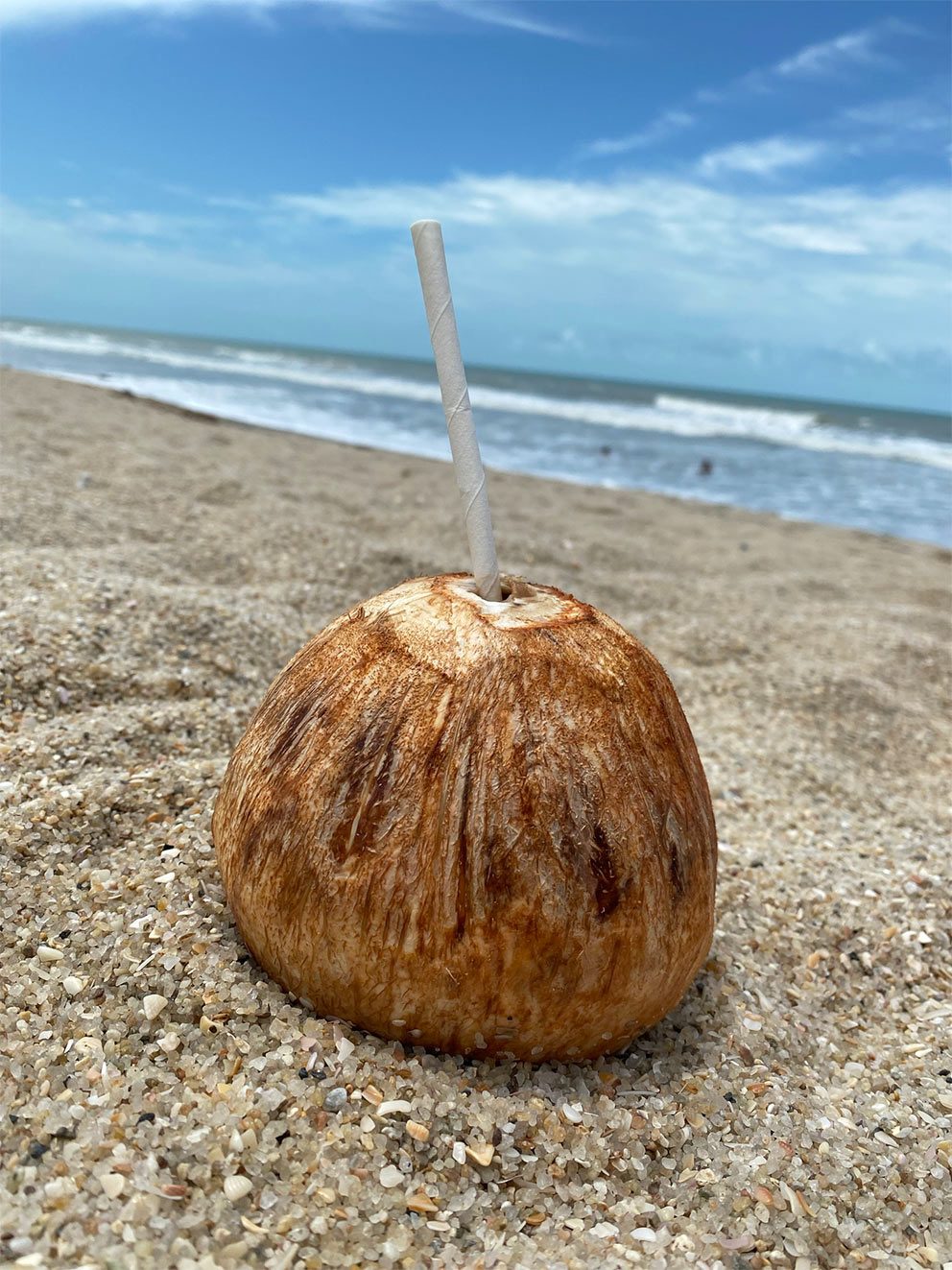
- Água de coco (coconut water). Sold from the husk for R$8–15, ice-cold, the universal hangover cure and morning hydrator.
- Mate gelado. Specifically the orange-iced sweet mate sold from coolers strapped to vendors' backs in Rio, it's brewed mate, sugared, on ice, cheap, addictive. Pair with biscoito Globo, the airy sweet/salty rings that have been a Carioca obsession for 70 years.
- Cerveja. Brahma, Antarctica, Skol, Itaipava, served estupidamente gelada ("stupidly cold") in tall 600ml bottles. Brazilians share, pouring small glasses for the table, and never let a glass stay empty.
- Caipirinha. Cachaça, lime, sugar, ice. The default afternoon cocktail. Variants with maracujá (passionfruit) and caju (cashew fruit) are excellent.
- Caipiroska. Same drink with vodka instead of cachaça, milder, often what tourists prefer.
Etiquette, vendors, tipping, beach safety
Beach vendors are constant, passing every two minutes selling shrimp skewers, queijo coalho grilled on a stick, sunglasses, sarongs, ice cream (Kibon!), bikinis. The polite refusal: a soft não, obrigado with eye contact. Don't ignore them. If you do buy, the food vendors are almost always safe, the queijo coalho and grilled shrimp are local staples. On safety: in busy beaches like Copacabana, Ipanema, Boa Viagem, and Praia de Iracema, do not bring valuables. Crime is opportunistic. Stick to populated stretches, never leave your bag unattended (ask the waiter to watch it if you swim, they will), and avoid the beach after dark in tourist zones. Most beaches are safe at night in smaller cities, but ask the locals.
Best beaches by type
Surf: Praia da Joaquina (Floripa), Itacaré (Bahia), Saquarema (RJ), and Fernando de Noronha for the bucket-list waves. Family: Praia da Pajuçara (Maceió), Porto de Galinhas (Pernambuco), Praia do Forte (Bahia), Bombinhas (SC), calm water, full-service barracas. Party: Jurerê Internacional (Floripa) for the polished beach club crowd, Praia do Futuro (Fortaleza) for big barracas, Pipa (Natal) for the hostel-and-backpacker scene, Búzios (RJ) for the European-flavored upscale version. Quiet: Caraíva (Bahia, no cars), Jericoacoara (Ceará, sand streets), Ilha Grande (RJ, no cars), and the south of Florianópolis (Costa de Dentro). For a single first beach to anchor your understanding of Brazilian beach life, spend a Saturday at Praia de Ipanema in Rio. Sit at posto 9. Order a coconut. Stay until sunset, when the whole beach claps. That's the country's instructional video.
Further reading
Pages and resources that pair well with this post.